Showing posts with label dog. Show all posts

Tuesday, November 27, 2012

Give Your Dog a Sexy Makeover


How's your dog looking these days? Running through puddles, rolling in mud, and fighting off fleas can leave any dog looking drab. But it doesn't have to be that way. And you don't have to spend a lot of money to have a fabulous looking dog.
Follow these tips and your dog will be the "cats meow"!
The most essential part of the process is perfecting the coat.
You want your dog to have a shiny, healthy coat that leaves people in awe.Before you go and buy brushes, expensive shampoo and cute bows; consider that it's what's on the inside that counts the most.
What are you feeding your dog? Are you giving them their proper vitamins and minerals? A dog's diet is what makes the difference between a scruffy looking coat, and a coat that looks like royalty. Read the labels on the food. To make that even
easier here is a tip: if you can find the food in your grocery store- then avoid it. You don't have to buy the most expensive dog food around, but foods with actual nutrients and not cheap fillers (corn, meal, etc.) are not found in the grocery store.
Nothing is a bigger turn off than bad breath! This counts for dogs too. Dogs should have a normal dental routine. Small dogs will need their teeth brushed a few times a week as they are more prone to tooth problems. Additionally, make sure
your dog has plenty of chews that clean the teeth. There are also products available that you can put in their water to help reduce plaque and freshen breath.
Some dogs will fight having their nails clipped like there is no tomorrow! But it still has to be done. Training your dog early to accept having their nails clipped can work wonders. If it's too late for that, and your dog gets fiesty, try to make it a relaxing experience. Give yourdog a treat for sitting next to you. Clip a nail, and give another treat. Clip another nail,
give another treat. You get the pattern. If that doesn't work you can always have another person distract your dog (either with treats or a toy) while you get to clipping.
After following these steps, your dog should be pretty sexy. But how's his figure?
People worry so much about their weight but when it comes to their dogs, they don't
seem to mind if they are unhealthily overweight. Ideally, your dog should
have a visible waistline behind the ribs. Stand above your dog, if you see a waistline
then you're all set. If not, you might want to consider cutting back on some of that
high quality food. And definitely cut out the treats!
When it comes down to it, looks are not important. Health is what counts.
Feeding your dog a healthy diet, having a regualar dental routine, nail clipping and maintaining a proper
weight will all add to the health, (and the life), of your precious pet.
This article is courtesy of SmallDogBreedSite.com. Visit http://www.SmallDogBreedSite.com to get the latest information on caring for, traveling with, and shopping for your small dog breed.

Article Source: http://EzineArticles.com/87888

Stop Your Dog From Jumping Up


There's nothing like coming home to a happy dog. Your good friend has been patiently waiting all day to see you and when you come through the door, he barks his hello and jumps up to say hi. But a jumping dog is usually not a pleasant thing for most people. It can cause embarrassment around guests, annoy those folks who don't like dogs as much as you, or even hurt someone with a little bite, scratch or knocking them over.
Since you want to control this jumping behavior, the most effective tool is the good, old-fashioned "Sit". A dog that is firmly sitting on the ground can't be also jumping up on you.
To practice this method, have a partner ring the doorbell, and as you are about to open the door, give your dog the "Sit" command. Have your friend come in and if your dog begins to get up or jump, repeat the "Sit" command until the dog quietly sits for you. Remember to praise him for his good work. You can practice this same thing yourself every time you come home.
Another useful command is "Off'. You might be tempted to say "down", but this can be confused with the down command for "lie down". "Off" is a more clear command in this case and can be followed by a "Sit".
As an alternative, some people might try to simply ignore the dog when they are jumping in the hopes that they will not be seen to encourage a jumping dog. This is certainly a gentle approach that might work, but it really depends on your dog's size, age and breed.
If you aren't having luck with "sit", simply try to fold up your arms, look away and turn around. After the dog has calmed down, you can then ask for the "sit" followed by praise. Repeat the process if he begins to jump again.
Another command reaction to a jumping dog is to raise up your knee into the dog's chest as he jumps. This might work in some situations, but your dog might misinterpret it as a playful gesture, and if you do it too hard might actually cause your dog pain or injury.
The key factor in any method you use is to remain patient and practice a consistent approach. Do not attempt a series of confusing commands and approaches as your dog is jumping and barking as this will be unlikely to help the situation.
Dog Training HQ provides dog training information, advice and resources to help dog and puppy owners learn to train their pet effectively. Please visit http://www.puppytraininghq.com for more helpful dog training and puppy training advice.

Article Source: http://EzineArticles.com/71322

Monday, November 26, 2012

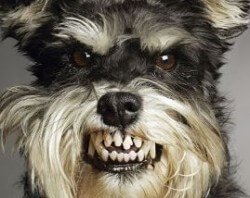
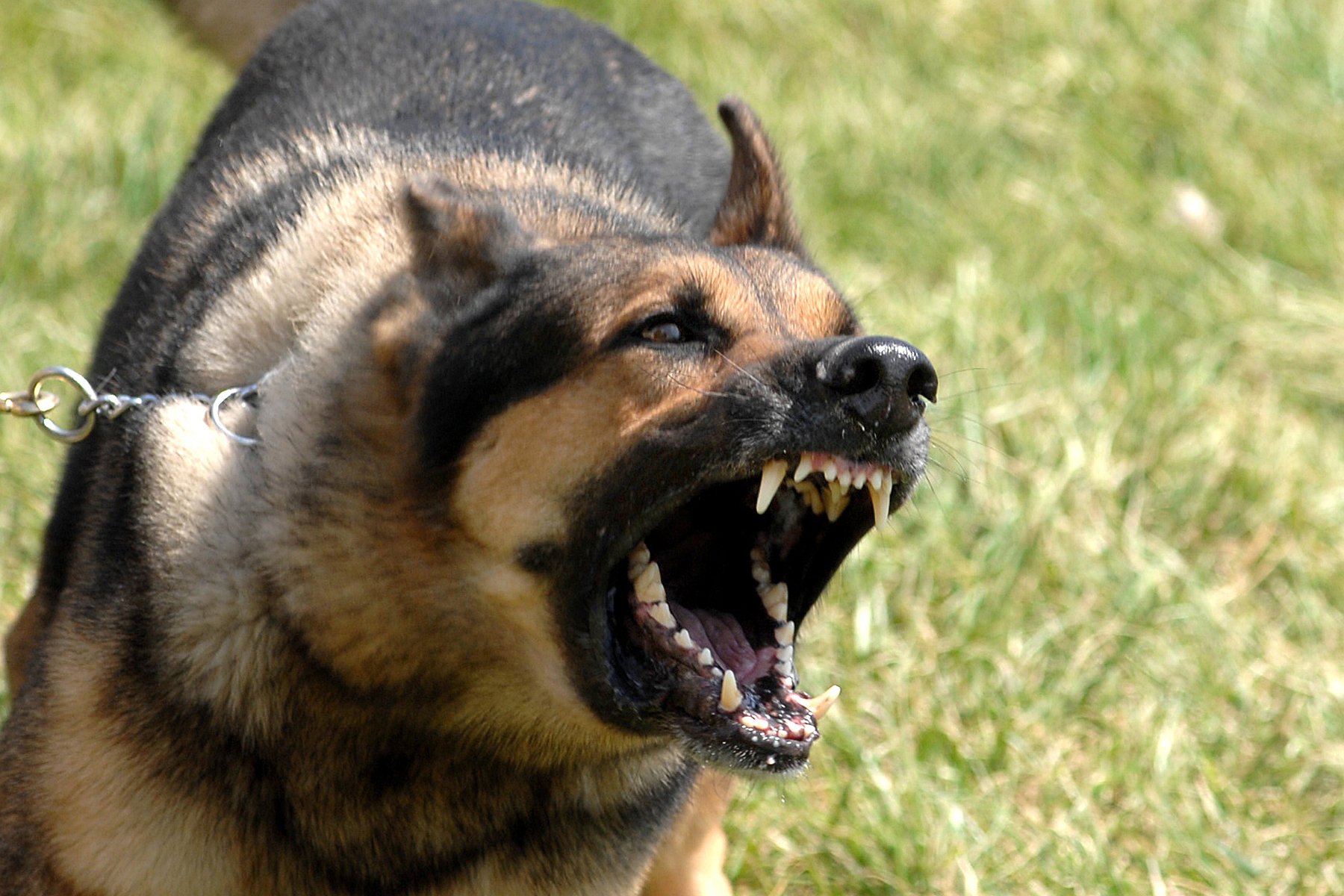
Is Your Dog Angry?


A growl is part of a dog's language. They growl when playing and they growl when threatened. So how do we know when our dog is angry?
Your dog is probably the most honest living member of the household! You know exactly what they think when they give you that 'look'. Most owners become attuned to their dog's characteristics and traits and can usually identify the dog's attitude by its manner.
However, some dogs will change their behaviour for any number of reasons. Here are a few to consider.
Illness and injury
If, for no reason, your dog suddenly snaps at you, the animal could be suffering from an undiagnosed illness or injury. If a dog is in pain, it will immediately use aggression to warn the person or other animal to 'get away'. This is a natural reaction, but it should be investigated immediately.
Common conditions include arthritis (joint pain), a missing tooth, foreign objects wedged in the paw and eczema. Seeking veterinarian assistance immediately is recommended.
If the dog's condition is not remedied it will begin to think it is being punished for no reason at all which will only lead to more stress and increased aggression.
Fear 
Your animal could be experiencing fear for any number of reasons. If your dog came to you from an unknown origin, it may have developed responses to certain movements or actions from past abuse. For example, a dog that was kicked by a previous owner will probably have an aversion to feet and legs. When a dog is fearful or frightened it will reflect this by its posture. The tail will rest tightly between the legs and it will probably snarl. In such a situation it is important to remember that any form of punishment will only add to the animal's problem. Identify what is causing the fear and ensure that all members of the household are aware of the problem. In such situations, the remedy is to work on improving the relationship and gaining the animal's trust.
Dominant dogs 
A dominant dog will display aggression differently to a dog that is afraid. Where a fearful dog will complete its growl with a high-pitched bark, a dominant dog will simply growl long and deep. Its posture will say, "watch out", the tail will be erect and the ears will sit forward.
Never approach or challenge a dog that is showing this form of aggression. In the first instance, it is best to ignore the animal rather than challenge it. But do not ignore the problem. There are also a number of books available that deal with aggression in dogs, including 'Who's the Boss - Understanding and Living with Your Dog', by Australian dog trainer Val Bonney, telephone (07) 3300 2959. However, seek guidance from a qualified dog trainer in your area as soon as possible.
Irritation 
There are many reasons why a dog becomes irritated and the only way for it to express its irritation is to growl and bare its teeth. This is a common problem around children and people who are not familiar with dog behaviour. A person or child could inadvertently irritate the animal or even threaten it by certain actions. Supervising young children around dogs is essential. A young child can not expect to know the ins and outs of dog psychology yet they are very susceptible to injury should a dog decide to bite or attack.
For lots of easy to read articles, full of useful information that is sure to help you out with your pet or pets, go to http://www.P-E-T-S.info. While you are there sign up for the PET NEWS email newsletter - it is FREE and packed with handy tips for pet owners.
Article Source: http://EzineArticles.com/101710

Dancing With Your Dog


Your dog can dance. If you love to dance and you feel like your dog has the deftness to move around with you, you might have just found the perfect activity for the both of you. A master who loves to dance can definitely teach his canine partner how to dance too.
Dancing is a fun and healthy activity for both you and your dog. It strengthens your bond and creates a joyful activity, which will keep you and your dog stress-free and happy. Dog dancing does not require you to have a pet of a specific age, size, or breed. As long as you feel the energy in your dog, you can definitely teach him how to dance. You can also take dancing with your dog into a higher level by joining competitions, exhibitions, and even entertainment events. Ashleigh and Pudsey has just won the 2012 Britain's Got Talent. Who knows? You and your canine friend might just be the next Superstar on television?
There are several types of dog dancing which you can teach to your furry friend. A popular dance category you can introduce him to is freestyle dancing. This type of dance does not require you to be a professional dancer but it will require that your dog learn some basic obedience. Teach your dog on how to follow cues to sit, walk on heel, weave, circle around you, lie down, bow, stop and so on. Once your dog has learned and mastered these cues, you can start to choreograph some actions for your dogs and synchronize it with yours. Experiment with the different genres and rhythm until you discover a dance move that you can execute together.
Alternatively, you can also teach your dog freestyle heeling or heeling to music. This type of dance is a bit more obedience intensive. The key to achieving this dance move is coordination. It is important that your dog must stay in step with you at all times as you dance. Unlike canine freestyle or freestyle dancing, heeling to music may not allow dog to move away from you, pass through your legs, or jump. Your dog should only be staying by your side as you dance together. Heeling to music dance can be easily learned when your dog has mastered freestyle dancing.
As you dance with your dog, you may even discover some moves that your dog offers naturally which you can incorporate into the dance routine. You will find too that your dog actually loves dancing as much as you do, from the excited wag of his tail and sparkling glow in his eyes. Dog dancing is also a good natural remedy for dogs that are experiencing nervousness and for hyperactive dogs, a great way for them to expend their energy. Above all, dancing keeps your pet relaxed, focus, and stress-free. If you do not have much time to dance with your dog but want him to feel happy, you can also enroll your dog into dog dancing classes conducted by certified dog trainers.
Dog Training Singapore offers a wide range of dog training services. Our dog dancing classes are conducted by a Karen Pryor Academy trained dog trainer.

Article Source: http://EzineArticles.com/7230883

Sunday, November 25, 2012

Is Your Dog a Sports Fan?


Does he faithfully sit by your side when you're watching the game? Do you take him with you to pre-game parties or to local games? If you answered yes to these questions, then it's time to reward your pet for his part in helping you support your favorite sports teams. You can do this with sweatshirts and jerseys with your team's logo on them just like the ones you wear.
There's Something for All Sports Fans
It doesn't matter if you're a dedicated NFL fan, MLB fan or if you simply love college sports, it's easy to find something with your team's colors or logo on it. This makes it easy to show your support for your team through your clothes. The same is true when it comes to your dog.
You can find jerseys, tee shirts, tank tops, sweatshirts and more for your four-legged sports fan just like the ones you find for yourself. While you might have a wider selection of clothes to fit small breeds, you can find some clothing to fit larger breeds, too.
It's a Great Attention Getter
If you enjoy getting attention, put a sports logo jersey on your pet and see how much attention you both receive. When people see dogs dressed in clothing, it usually makes them smile and conversations seem to start up naturally. When the outfit she's wearing has your team's logo on it, you'll have a chance to brag a little and talk about how great your team's doing this season.
Accessorize
If your dog doesn't like wearing clothes or if you think it's a bit much, accessorize instead. If you do think it's a great idea, it's important to understand that some dogs don't have any interest in wearing clothes and you don't want to stress out your pet by dressing him up if he doesn't like it. However, that doesn't mean he can't still show off his love for sports alongside of you.
For example, she can wear team spirit hair bows or both male and female dogs can wear bandanas and hats made especially for pets. You can also buy leashes and collars with sports team logos on them, which gives you another option for pets who don't like wearing clothes. You'll need these things when you take her for walks, so why not choose ones that show off your dog's team spirit.
It's a Lot of Fun
Your dog is your most faithful companion and he always roots for your team. Why not let him help you cheer on your sports team in a unique way that gets lots of attention. Dressing your pet is fun, entertaining and you can both wear your outfits everywhere you go. You don't have to wait for game night to support your team.
You can wear your matching outfits when you go for a walk around the block, to the park or when visiting friends. On top of that, it's a fun way to include your pet in something that you enjoy. It'll make her feel special and she'll most likely love the attention the clothes and accessories bring her.
Check out Doggie Clothesline for a wide selection of dog sports clothes and accessories for your four legged sports fan.
Article Source: http://EzineArticles.com/7205655

Saturday, November 24, 2012

Choosing Wire Dog Crates


Dog crates are an essential part of any canine household. Wire crates are among the most popular because they are unobtrusive, and can be folded up when not needed, or to transport from place to place. They are fairly heavy, which can be a positive if your dog tends to rock around while crated.
Select a wire crate of the appropriate size for your dog, who should be just able to stand up, turn around, and lie down comfortably. Anything larger will not provide the same sense of security to your dog, and may result in eliminating in the dog crate. Dogs instinctively won't eliminate where they sleep, but a pet crate which is too large may give the impression, to the dog, that there is room to do both.
Wire dog crates have a pan in the bottom which keeps the dog from having to stand on the metal slats. You can place a crate pad, blanket, or pillow in the bottom for additional comfort. However, some dogs will chew or dig these materials, even if they don't do so outside of the crate. In that case, it's probably safer for the dog to avoid using them.
Most wire dog crates have two doors: one on the side and one at the end. You may find that one or the other is more convenient depending on the situation. For example, the crate may be fitted into an area in the home that wouldn't be possible if only one door option was available. Similarly, you can switch locations easily without worrying about access to the door.
The doors close with one or two simple latches. Rarely, a dog will figure out how to open the latch. With a wire crate, you can simply add a padlock or another clip which the dog can't operate. No other crate style can be adapted in this way.
Most dogs like being in a pet crate. It satisfies their instinctive need for a den: a cosy spot, surrounded on all sides, in which they can totally relax. Left home alone, at large in the home, dogs are hyperalert, keeping an eye on things for you. Other dogs become bored and find entertainment in destroying furniture or other property, which can also be a safety hazard for your pet.
By putting your dog in a wire crate when you can't watch him, you give both your dog and yourself more peace of mind. You don't have to worry while you're out what your dog is getting up to. Dogs like routine, so regular crating can become a source of comfort in that way, as well.
Dog owners like wire crates because they have the most flexibility. They are more understated than plastic dog crates, and can be decorated with fabric that matches the room's décor. The ability to fold up the crate when it is not needed is another very handy feature. They're also chew-proof, so they can be used for any dog.
Are you looking for more information regarding dog crates? Visit http://www.petextras.com.au/wire-dog-crates/ today!


Article Source: http://EzineArticles.com/7118640

Tuesday, November 20, 2012

Train Your Dog With Respect


Proper training of your dog should begin when he is a puppy. The first four months of a dog's life are very important in the training of your dog. This is when they learn behaviors that they will practice in the future.
Socializing your dog is one of the most important things you can do to influence your dog's future behavior. As soon as you bring your new puppy home, you should start letting him interact with other puppies, dogs and humans. Take your dog to parks where there will be other pets and people. Ask your friends if it is okay for your dog to visit their dog at their home or yours. Puppies will learn how to get along with other puppies and dogs if they are allowed to play with them when they are young. Introduce your dog to new experiences. Give him rides in the car, walk him on a leash around the park, let him hear the vacuum cleaner running. Help your puppy get used to a regular routine of baths, brushing , and healthy meals.
Housebreaking your puppy takes a lot of patience. Fix up a nice little space or room for your puppy. Place his food and water bowl there along with some favorite toys. Be sure to put newspapers all over the floor and replace them often. When you are at home with the puppy, let him out of his room for a short period of time to roam around and play. Return your puppy to his room and the newspapers after about 30-45 minutes to help with his housebreaking. Do not punish your puppy for having an accident. It could take up to six months before he is fully housebroken. Remember, most puppies can't control their bladder overnight until they are about four months old.
Your puppy will undoubtedly want to chew on things he shouldn't. Train him to leave your things alone by keeping them out of reach and by providing him with a variety of doggy chew toys. If he chews on your favorite slipper, don't punish him. Simply replace the slipper with one of his own chew toys. Praise him for playing with his own toys.
Sometimes, you will have to leave your dog home alone. Help him to feel comfortable alone by leaving on the television or radio for company. Leave an adequate amount of food and water. Don't forget to leave lots of doggy toys for him to play with.
You may be having trouble training your dog. Maybe he's not responding to your commands or seems to be ignoring you. Or maybe the housebreaking is backfiring and your dog is having accidents all over the house. These may be signs of a medical condition. Be sure to visit the vet regularly to rule out things like loss of hearing or bladder infections. Always be sure your dog is healthy, happy and well cared for.
If you feel this job is too big for you or you just want some additional instruction or behavioral training for your dog,, there are many reputable professional dog trainers and obedience schools. Do some research and ask questions to find the right school for your dog.
Most importantly, you must be a responsible owner in order to train them properly. If you want your dog to trust and respect you, you must do the same in return. Never hit, kick, or slap your dog. Include your dog in family outings and games and general family life. Do not play aggressive games with them as this can cause them to behave aggressively. Reward good behavior and yet do not spoil your dog. Remember, if you practice lots of patience, love and respect for your dog, you will receive the same from him.
Article Source: http://EzineArticles.com/16758

Responsible Dog Ownership


With all the companionship and love that our dogs give so freely, it's hard to imagine that some owners just don't take responsibility for their dogs. But it's true. Millions of dogs--healthy dogs--are euthanized every year. Whether through owner neglect or owner ignorance, millions of healthy dogs will endure the same fate this year. So what's a responsible dog owner to do? The best thing you can do, as a dog owner, is to ensure that your dog doesn't become a statistic, and you do that through responsible pet ownership.
Welcoming a new dog into your house means taking on additional long-term responsibility. Many new dog owners find something cute or romantic about bringing that puppy in the window home until they realize that there's a modicum of work involved in caring for that cute, adorable little face, and a price to pay for those wet, slobbering kisses. You wouldn't expect to return a baby. Its' no less wrong to return a dog when the novelty wears off, and it ought to be criminal to leave a dog somewhere on its own. In many ways, dogs are as vulnerable as newborn infants are, but dogs are dependent upon their owners for their entire lives.
Listed below you'll find basic steps to responsible dog ownership, and many of them are just common-sense rules of the road.
1. Selecting Your Dog - Turn to a local animal shelter or rescue operation to select a puppy or dog. Remember that older dogs need loving owners too. Refuse to purchase a puppy or dog that started life in a puppy mill.
2. Test Your Dog - Contact a veterinarian and ask him to run the usual series of tests on your new companion.
3. Spay or Neuter Your Dog - Responsible pet owners always spay and neuter their dogs and cats. There are far more dogs waiting for adoption than there are owners to adopt them.
4. Provide Medical Care - Aside from the annual physical examination and vaccinations, protect your dog from heartworm, ticks and fleas. Talk with your vet about the many options available today. Contact your vet at the first sign that something is wrong with your dog.
5. Provide Adequate Food and Water - Provide food suited to your dog's age, size and condition.
6. Walk Your Dog - Your dog will let you know when it needs to be walked.
7. Provide Exercise and Recreation - Provide ample space, dog toys and opportunity for your pet to exercise. If you haven't thrown a Frisbee in twenty years, you'll be surprised at how much fun it is to try to outsmart your dog--unlikely!
8. Protect Your Dog from Abuse - Animal cruelty is serious business, and in some states, it's a felony. Even the FBI acknowledged that animal cruelty is a known marker (future indicator) of violence against humans. If anyone in your house intentionally mistreats your dog, seek help immediately. You could thwart the next school shooting.
9. Discourage Aggressive Behavior - You'll know the difference between hearty play and aggressive behavior. Contact your vet at the first sign of aggressive behavior to discuss your options.
10. Coping with Serious Illness and Geriatric Dogs -Geriatric dogs are prone to many of the same illnesses that plague geriatric humans. You'll want to do everything in your power to keep your dog comfortable at the end, but at some point, it may become necessary to end the suffering. If you've been a responsible dog owner throughout the dog's life, you'll want to end that life just as responsibly as you cared for it.
M J Plaster is a successful author who provides information on shopping online for dog food and more dog products. M J Plaster has been a commercial freelance writer for almost two decades, most recently specializing in home and garden, the low-carb lifestyle, investing, and anything that defines la dolce vita.


Article Source: http://EzineArticles.com/12739

Monday, November 19, 2012

What Can You Do About Excessive Dog Barking?


Although you love your dog, sometimes they can get on your nerves when they bark too much. All the noise can really irritate your neighbors too. You should know that there are many reasons why dogs bark. Only after learning why your dog is barking so much can you begin to do something about it.
Attention

One of the main reasons for excessive dog barking is for attention. Canines love their family members and want to spend a lot of time with them. If you don't give your dog enough attention, he may start barking too much in an effort to get it.
Owners need to be careful when dealing with this type of barking. If you do anything to respond to your dog, then he will learn that barking gets your attention, and will continue to do it excessively. Your dog won't care if you give him positive or negative reinforcement, just as long as you do something. Giving him a treat or telling him to be quiet are forms of attention.
Boredom
Sometimes, dogs simply have nothing else to do and decide to bark to pass the time. Leaving your pet alone for long periods of time with nothing to do can easily lead to this behavior. The best way to prevent this type of barking is to provide your dog with toys, puzzles, or other objects to occupy his time. Ensuring he gets enough exercise will also leave him with less energy to expend barking.
Separation Anxiety
Dogs have feelings too, and can easily become anxious when their owners are away. Consulting a behaviorist or trainer is the best way to deal with this problem. One thing you can do is to work on getting your dog used to being alone. Leave him alone for a short period of time, then return and assure him that everything is fine. The next time you leave, stay gone for a little bit longer.
Communication
Dogs are very social animals. Sometimes, your dog will start barking excessively because other dogs are barking. You may notice that your dog will start barking when a canine down the street does so. This is their way of identifying with each other. If you have multiple dogs in your household, then you may deal with this type of barking more often than you'd like.
So, what exactly can you do about excessive dog barking? Most importantly, you will need to understand exactly why your dog is acting the way he is. If you are unable to do so by yourself, don't be afraid to ask for help. That's the reason why behaviorists and trainers exist in the first place. Above all, make sure that you're patient with your dog. Getting irritated and lashing out at him certainly won't make matters any better.
It is best that you learn all you can about different dog diseases such as canine osteosarcoma. Learning this information will help you recognize signs of disease quickly. You can go to common-dog-diseases.com right now to learn about many different diseases in dogs.
Article Source: http://EzineArticles.com/7309271